
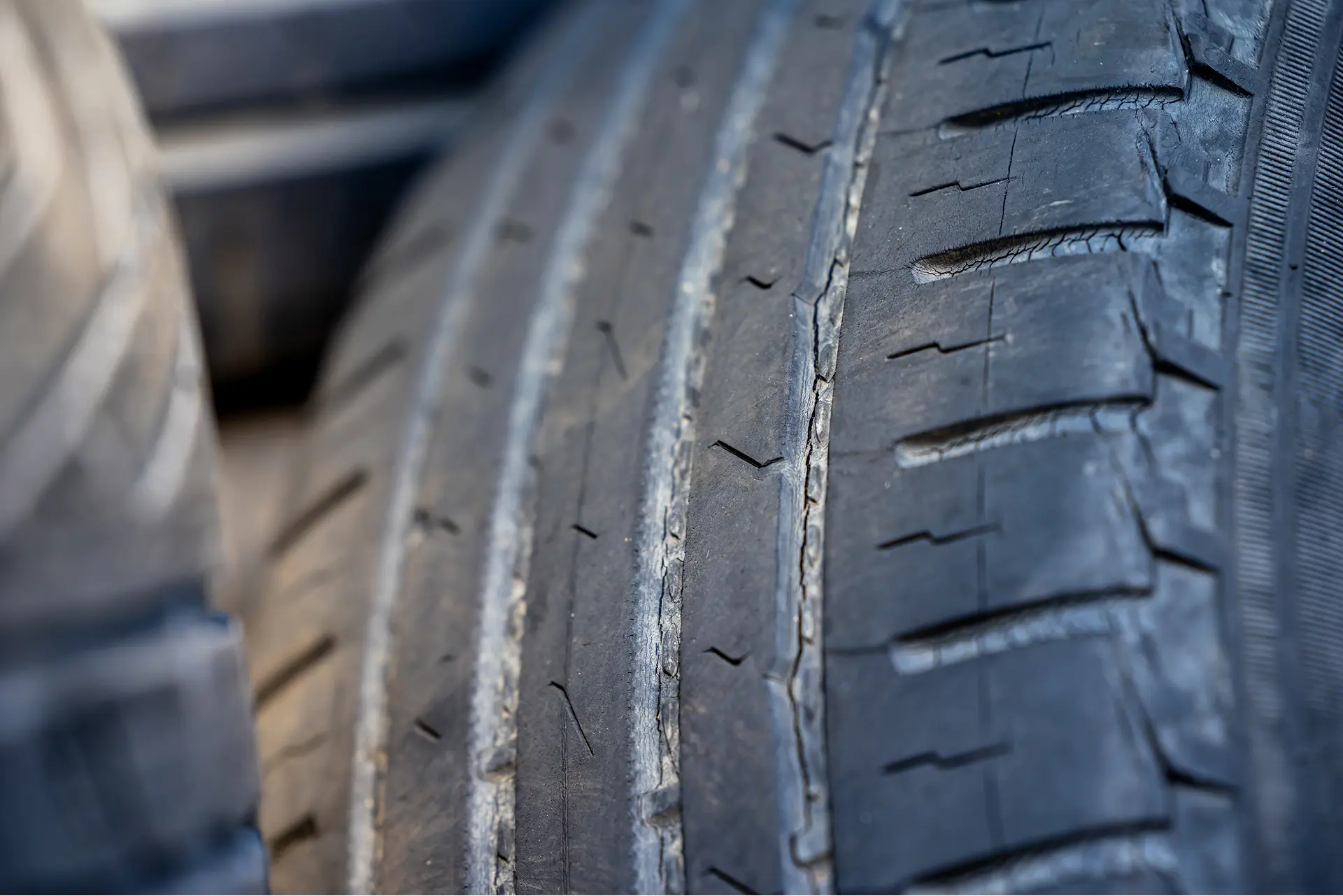
Your tyres are the only point of contact between your vehicle and the road. Knowing when to replace them is essential for maintaining grip, safety, and performance in all driving conditions.
Check the tread depth
The legal minimum tread depth in the UK is 1.6mm across the central three-quarters of the tyre.
However, many experts recommend replacing tyres at 3mm, as performance in wet conditions starts to decline significantly below this level.
Look for visible damage
Cracks, bulges, or cuts in the tyre sidewall can weaken the structure and increase the risk of a blowout.
If you notice any of these signs, the tyre should be inspected or replaced as soon as possible.
Watch for uneven wear
Uneven wear patterns can indicate alignment or suspension issues.
If one side of the tyre is more worn than the other, it is important to address the underlying cause as well as replacing the tyre.
Age of the tyre
Even if the tread looks acceptable, tyres degrade over time due to exposure to heat, sunlight, and environmental conditions.
Most manufacturers recommend replacing tyres after 5–6 years regardless of wear.